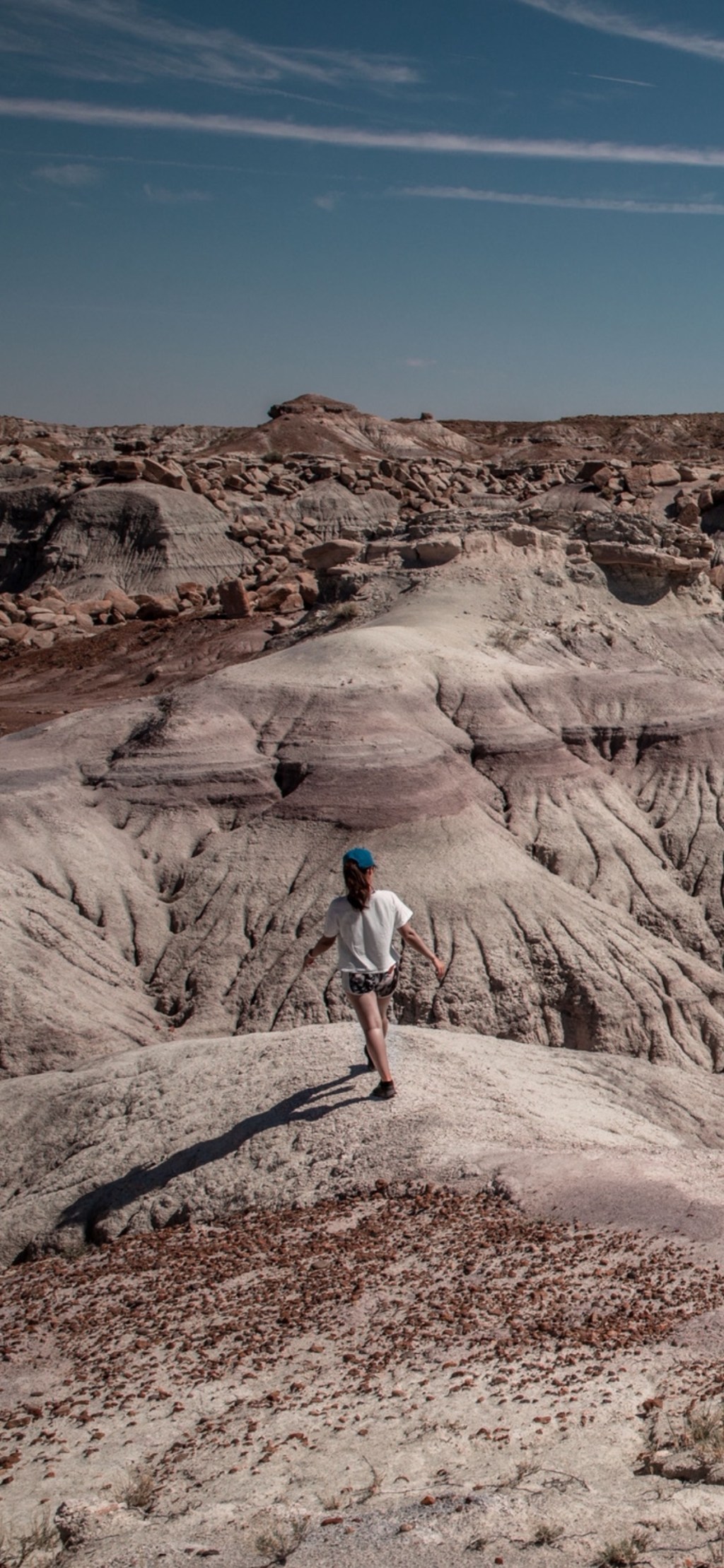
Forgive me for the long pause. Life got in the way, but I’m back!
Where were we? Oh, that’s right! The River Road.
Well, after cruising around the River Road and getting some nice pictures and views, you’re going to find yourself on the way to the Bentonite Hills and the Capitol Reef.
But before getting there, let’s take a quick stop on this other place called Devil’s Canyon.
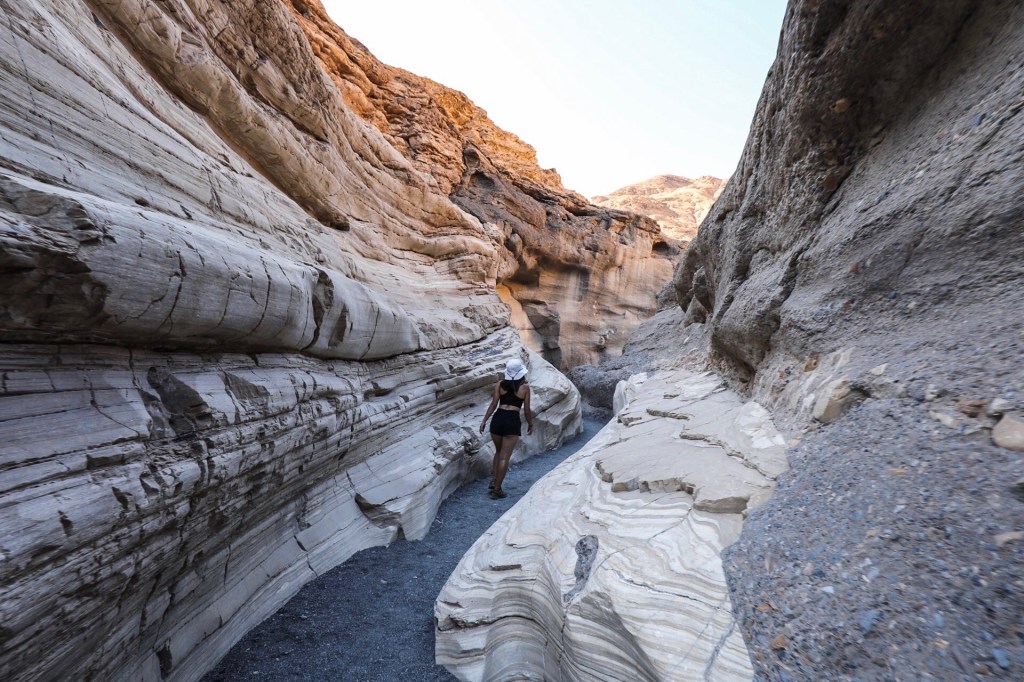
The canyon feels like an open-air museum, with dramatic rock formations shaped by wind and water. The access is relatively easy, but not too many people hike around, so it’s a great place to find solitude. The scenery is amazing, so much that can be compared to the famous formations in Zion National Park.
All you’ll need is about one or two hours to explore around. Start by taking the Exit 114 on I-70, following the road as it winds east and then south, descending into the canyon. Note that the section of road down the cliff is very rough and requires 4WD. But if you can’t drive all the way, no worries, park and hike the short distance into the canyon.
Once you get there, keep following the main canyon trail westward to reach the initial Narrows. Here is where you’ll have a scenic path and get a peep into the canyon’s beauty. The trail is about 5 miles (or +/- 8km) round trip.
And to wrap it up, if you have a little more time to spare, explore some of the side canyons branching off the main trail. Be aware that hiking in deep sand can be more challenging than expected.
Super quick stop, just to stretch the legs a little bit. As always – don’t forget to download a map to your phone beforehand, bring enough water to go in and out of the trail. And NEVER hike a canyon during or after rain due to risks of flash flooding.
Now that you have recharged, let’s head to our next stop: Rainbow Mountain.
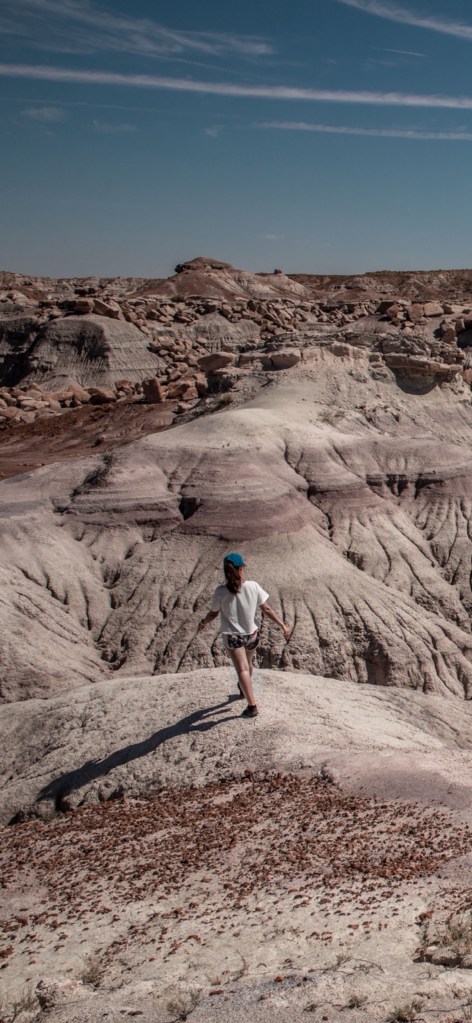
Bentonites Hills are considered one of the best off-road destinations in the United States. But here is the catch: those rainbow mountains are like an art museum – you can look, but you can’t touch.
The surfaces are so delicate and easily damaged that hiking through the hills is not allowed. Scars from footprints and tire tracks can take years to heal. So when visiting, enjoy the views from the road. I promise it’s worth it.
If you want to see the colors very vividly, try to stay for sunset or arrive for sunrise. Which, if you stop by the Devil’s Canyon, you’re going to be arriving just in time to see how colorful it gets.
Once you’re done with the sunset, you’ll have two options:
1 – Camp on BLM land – the sky gets really dark, so you’ll be able to see an incredible amount of stars. The downside is: there’s no amenities. If you’re not used to camp in general, I do not recommend staying. Or you can –
2 – Head to the Whispering Sands Motel in Hanksville. Simple, clean, and feels like a true desert oasis. And after a nice shower, grab a bite on Outlaw’s Roost if you like Mexican cuisine. I, personally, love it. But if you prefer something simpler, like a burger, you can definitely stop by Stan’s Burger Shak.
For your day 2, start by grabbing a coffee at Mowgli’s Cafe. They have a really nice variety of coffees and non-coffee beverages (smoothies, teas..), and a few options of pastries. And before starting your adventures, I will recommend gearing up with some snacks, water and offline map on your phone for the day.
For today, our escape will be the Cathedral Valley loop. This place falls half inside the Capitol Reef National Park and half in BLM land. The terrain is a bit challenging, which makes it one of the lesser-visited areas of the park. So if you enjoy solitude, this is your place. But remember: to drive there your vehicle must be high-clearance.
Driving straight through, the entire loop will take about 4 hours, but you should definitely stop to enjoy at least some hikes. If you feel adventurous enough, get a permit and stay the night and you’ll be in awe at imposing monoliths stretching for starry skies.
A few stops worth visiting: Temple of the Sun & Moon, Glass Mountain and Gypsum Sinkhole. Keep in mind that this is a remote area, meaning that phone service is not available. Be prepared and always check for the weather conditions.
If you decide not to stay for the night, let’s start rolling to the Fruita Historic District. The scenic drive is very interesting because you’ll feel like the canyon walls narrows as you enter the district. Make sure to stop by the Gifford Homestead for a fresh fruit pie or cinnamon roll. You can either enjoy it there or head to the Fruita schoolhouse. This place represents the first community building of the Fruita settlement, a one-room relic from pioneer days.
Another great place to explore is the Capitol Gorge. Fun fact: the labyrinthine road was once the main transport route through this region from 1884 until Highway 24 was opened in 1962. There is an easy one-mile hike from the trailhead that takes you to a rock wall called Pioneer Register where you can see the names of miners and settlers.
But in case you’re ready to wind down for the day, you can wander around the fields and orchards. You can pick small quantities of fruit in season and pay at the self-pay station near the orchard entrance. The money goes toward maintaining the trees.
Where to stay:
– Casitas at Capitol Reef
– Capitol Reef Resort
– SkyRidge Inn
– Austin’s Chuckwagon Lodge (budget friendly)
Where to eat:
– Hunt & Gather – more on the pricey side
– Rim Rock Patio (budget friendly)
– Chak Balam (budget friendly)
Note: Torrey has plenty of restaurants with great reviews. I’m leaving three suggestions, but make sure to explore as many options as you can.
And for your third and last day, you can start by having breakfast in a different restaurant or just go back to the Gifford Homestead for another pie and coffee.
And when you’re ready, start with Hickman Bridge – this is a 2-mile round-trip to a massive and stunning natural arch. Now, if you have more than these 3 days to spend on this National Park, you can definitely walk more. There are 3 hiking options for this trail – this 2-mile walk to Hickman Bridge, the 4.6-mile round-trip hike to the Rim Overlook, and the 9.4-mile round-trip hike to the Navajo Knobs.
Honestly, the more you stay, the more you will find. Let’s keep going!
Another great one is Cassidy Arch, a 3.5 miles round-trip. A little challenging at first, but nothing too crazy. The arch is so big that, at first, you’ll think that it is just a hole on the ground. On your way back, instead of going straight back to the car, you can take a short detour and continue down the Grand Wash a bit farther. This part is known as mini Zion for its similarity to The Narrows hiking trail at Zion National Park. Unlike the Cassidy Arch trail, it’s flat and easy to walk.
Again: Never attempt to hike a canyon if it’s raining or storming in the area.
Now, for your last trail: Cohab Canyon – this short set of switchbacks is one of Capitol Reef’s most underrated hikes. The trail leads you into a hidden pocket in the cliffs that feels completely secluded. This hike feels like walking through a painting. You’ll pass hidden slot canyons on either side and they’re big enough for you to duck into one of those. “Why is she saying that?” – Great question!
A fun/funny fact about the name: Cohab Canyon is named after the area’s early Mormon settlers, who practiced polygamy (“cohabitation”) and allegedly used the canyon as a hideout when federal marshals were sent to arrest them.
Well, after all these walking, trails, and hiding into canyons, make sure to rest a little before our next stop.
Which one will it be, you might ask?
Valley of the Gods. See you there!


Leave a Reply